theshaduli.com

Author name: mohammedshaduli007@gmail.com

Uncategorized

Is AI Actually Making Digital Marketing Easier?

Is AI Actually Making Digital Marketing Easier? Every few weeks, a business owner asks me the same question: “Now that AI can write everything, isn’t SEO basically automatic?” I understand why they ask. The tools look magical for the first ten minutes. But after working with AI in my own SEO projects every day, my honest answer is that it makes some parts of digital marketing easier and other parts harder. Where AI genuinely helps I’ll start with the good news, because it’s real. Research used to eat a huge share of my time. Grouping hundreds of keywords by search intent, summarizing what the top ten ranking pages cover, or pulling patterns out of a messy spreadsheet could take an afternoon. Now I can get a solid first pass in minutes. That doesn’t replace my judgment, but it gets me to the point where judgment matters much faster. The same goes for first drafts, meta description options, FAQ ideas, and content outlines. When I’m staring at a blank page, having something to react to is a gift. Editing a rough draft is far easier than inventing one from nothing. AI is also great for the boring, repetitive jobs. Reformatting product descriptions, writing alt text variations, drafting schema markup, and cleaning up titles are all tasks I’m happy to hand off. Where it quietly makes things harder Here’s the part people don’t tell you. When everyone can produce a 1,500-word article in two minutes, the internet fills up with content that sounds fine and says nothing. Search engines and readers both notice. The result is that publishing more no longer gives you an edge. Being useful does. A generic article about “10 tips for better social media” is now the cheapest thing on the web. What stands out is a real example, a local detail, a lesson learned from an actual mistake, or an opinion someone is willing to defend. I’ve also seen the trust problem up close. AI will confidently state a wrong number, invent a source, or describe a Google update that never happened. If you publish without checking, you’re putting your reputation behind a guess. Fact-checking has become a bigger part of my workflow, not a smaller one. There’s a third problem that’s harder to see: sameness. When a hundred businesses in the same city ask the same tool for a blog post about the same topic, they get almost the same post. If your content reads like everyone else’s, you’ve given people no reason to choose you. The skill that matters now The most valuable skill in digital marketing has shifted. It used to be about who could produce content fastest. Now it’s about who can direct, judge, and improve what AI produces. That means knowing your audience well enough to spot when a paragraph is off. It means understanding search intent instead of just stuffing in keywords. It means adding the human layer: your voice, your experience, your local knowledge, your honest opinion. For me, that human layer is the whole job. A business owner in Malappuram doesn’t need a perfectly average article. They need content that sounds like them, speaks to their customers, and answers the questions those customers actually ask. No tool knows that unless a person brings it to the conversation. How I actually use AI Here’s my honest routine. I use AI to speed up research, brainstorm angles, and produce rough drafts. Then I rewrite in my own voice, add real examples, verify every claim, and cut anything that sounds like filler. I never publish raw output. Not once. If I can’t tell which sentences are mine and which are the tool’s, that’s a sign I haven’t edited enough. I also treat AI like a fast, eager junior assistant. It works quickly, it never gets tired, and it needs supervision. If I hand it a vague task, I get vague work back. If I give it clear context, a specific audience, and a real goal, the output improves a lot. So, is it easier? Easier to start, yes. Easier to win, no. The barrier to producing marketing content has dropped to almost nothing, and that’s exactly why the bar for standing out has gone up. The businesses that will do well are not the ones using AI the most. They’re the ones using it wisely, saving time on the mechanical work so they can spend more on strategy, quality, and connection. If you’re a small business owner feeling overwhelmed by all this, here’s the simplest advice I can give. Use AI to save time, not to replace your voice. Check everything it tells you. And keep asking yourself one question before you hit publish: would a real customer find this genuinely helpful?
Uncategorized

Marketing and Ads Jobs Are Going Remote. Here’s What That Actually Means for You

Marketing and Ads Jobs Are Going Remote. Here’s What That Actually Means for You A few years ago, when I mentioned working in marketing, people assumed I sat in an office all day, in meetings about campaigns nobody outside the room cared about. That image doesn’t really hold up anymore. A huge chunk of marketing and ads work, from running paid campaigns to managing content calendars, now happens from home offices, coffee shops, and spare bedrooms turned into workspaces. I want to talk honestly about what’s happening in remote hiring for marketing and ads roles right now, because there’s a lot of noise online and not enough clarity. Why Marketing Was Built for Remote Work From the Start If you think about it, marketing was almost designed to go remote before most other industries. Most of the work happens on a laptop anyway. Writing ad copy, building campaigns, checking analytics, scheduling posts, none of that requires being physically present anywhere specific. Companies figured this out fast. Once they realized a good performance marketer in another city or even another country could run their Google Ads account just as well, if not better, than someone sitting in the office, hiring started opening up in ways it never had before. This isn’t a trend that’s fading either. If anything, it’s become the default expectation for a lot of marketing roles, especially in ads management, content creation, and email marketing. What Companies Actually Look for When Hiring Remote Marketers I’ve spoken with several hiring managers over the past year, and a pattern keeps showing up. Companies hiring remote marketing talent care less about where you studied or which agency you worked at, and far more about proof that you can actually deliver results without someone watching over your shoulder. They want to see real campaigns you’ve run, even small ones. They want numbers, not just claims. Something as simple as “I managed a 500 dollar ad budget and brought the cost per lead down by 30 percent” carries far more weight than a long list of software you claim to know. Communication matters more in remote hiring too, maybe even more than in-office roles. If you can’t clearly explain your strategy or update a client without back and forth confusion, that becomes a real problem when everyone’s working across different time zones and nobody’s sitting three desks away to clarify things quickly. The Skills That Actually Get You Hired Remotely Based on what I’ve seen work for people breaking into remote marketing roles, a few things stand out consistently. Being genuinely good at one specific thing beats being average at five things. Someone who’s excellent at Meta Ads management is often more hireable than someone who claims to do everything from SEO to email marketing to graphic design, but not particularly well. Having a portfolio, even a small one, matters enormously. This doesn’t need to be flashy. A simple document or website showing two or three real campaigns, what you did, and what results came from it, tells a hiring manager far more than a resume ever could. Comfort with tools like Slack, Notion, Asana, and Google Workspace is almost assumed at this point. Nobody expects you to be an expert on day one, but remote teams move fast, and struggling with basic collaboration tools slows everyone down. Self discipline is the quiet skill nobody talks about enough. Remote marketing roles often come with flexible hours, but flexible doesn’t mean unstructured. The people who thrive are usually the ones who’ve figured out how to manage their own time without external pressure forcing them to. Where to Actually Find These Jobs A lot of people assume remote marketing jobs only exist on huge platforms like LinkedIn, but there are better, more targeted places to look. Sites like We Work Remotely and Remote OK list marketing and ads specific roles regularly. Agencies increasingly hire freelance or contract based remote marketers through platforms like Upwork, especially for ads management and content work. Smaller startups often post remote roles directly on their own websites or through niche Slack and Discord communities built around marketing. Networking, even if it feels a little uncomfortable at first, genuinely works better than most people expect. A simple, honest message to someone running ads for a small business, offering feedback or asking a smart question about their campaigns, has led to real opportunities for people I know personally. My Honest Take on Whether It’s Worth Pursuing If you’re considering a career move into remote marketing and ads work, I think it’s genuinely one of the more accessible paths into flexible, well paying work right now. It doesn’t require a fancy degree. It rewards actual skill and results over credentials. And the demand isn’t slowing down, since businesses of every size need someone managing their online presence and ad spend. That said, it’s not a shortcut or an easy way out. Remote roles still require real competence, consistent communication, and the discipline to manage your own workload without daily supervision. If you’re willing to build real skills and show real results, though, this is one of the more open doors in the job market right now, and it’s only getting wider.

Uncategorized

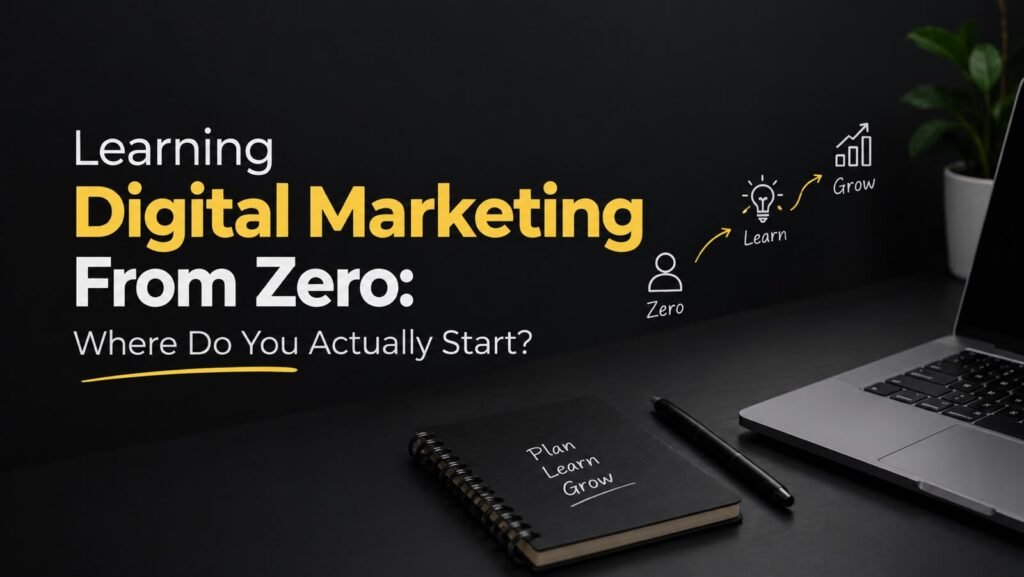
Learning Digital Marketing From Zero: Where Do You Actually Start?

Learning Digital Marketing From Zero: Where Do You Actually Start? Someone asked me recently how they should start learning digital marketing when they know absolutely nothing about it. No business background, no design skills, no idea what SEO even stands for. Just a laptop and a lot of motivation. It’s a more common starting point than people think. Most of the marketers I know now, myself included, didn’t start with some structured plan. They started messy, confused, and a little overwhelmed by how many terms got thrown around. So if that’s where you are right now, you’re actually in good company. Here’s how I’d approach it if I were starting completely from scratch today. Stop Trying to Learn Everything at Once The biggest mistake beginners make is trying to master SEO, social media, email marketing, ads, analytics, and content writing all in the same month. There’s so much free information online that it becomes overwhelming fast, and most people quit within a few weeks because they feel like they’re drowning. Digital marketing is not one skill. It’s a collection of related skills, and no single person is expected to be an expert in all of them right away. Even experienced marketers usually specialize in one or two areas and stay comfortable, not expert level, in the rest. So the first real step is picking one starting point instead of trying to swallow the whole subject in one go. Understand the Big Picture First Before touching any tool or platform, spend a few days just understanding what digital marketing actually is, in plain terms. At its core, it’s about getting the right message in front of the right person at the right time, using online channels instead of traditional ones like TV or print. That’s it. Everything else, SEO, ads, email, social media, content, is just a different channel or method to do that one thing. Once that clicks, all the individual pieces start making a lot more sense, because you understand why they exist instead of just memorizing definitions. Pick One Skill to Start With I usually recommend beginners start with either content writing or social media management, because both require very little technical setup and teach you how to think about an audience early on. Content writing teaches you how to communicate clearly and persuasively, which is a skill that carries into every other part of marketing. Social media management teaches you about audience behavior, timing, and engagement, which is equally valuable. From there, move into something more analytical, like Google Analytics or basic SEO. Learning to read data, even at a beginner level, will change how you think about every marketing decision you make afterward. Paid ads, whether Google Ads or Meta Ads, are worth learning a bit later. They involve budgets and require more caution, so it helps to already understand audience and messaging before jumping into that world. Use Free Resources Before Paying for Anything There is genuinely no need to spend money on expensive courses right away. Google itself offers a free Digital Marketing course through Google Digital Garage. HubSpot Academy has excellent free certifications on inbound marketing, content, and email. YouTube alone has more structured tutorials than most paid courses. Spend your first month or two learning through these free resources. Only consider paying for something once you already know the basics and want to go deeper into a specific specialization, like advanced SEO, paid ads, or marketing automation. Practice on Something Real, Even If It’s Small This is the part most beginners skip, and it’s the one that actually matters most. Reading about marketing and doing marketing are completely different experiences. Start a small blog, even if only three people read it. Run a tiny Instagram page for a hobby you care about. Offer to help a local business, even for free, just to get real practice managing their social media or writing their content. None of this needs to be perfect or impressive. It just needs to be real, because that’s where actual learning happens. I learned far more from managing one small, imperfect campaign than I did from reading ten articles about marketing theory. Get Comfortable With AI Tools Early Since you’re starting fresh in 2026, this part is worth mentioning. Tools like ChatGPT and Claude can help you brainstorm content ideas, draft social captions, or explain confusing concepts in simpler terms. Learning to use these tools well, right from the beginning, will save you time and help you understand how modern marketing workflows actually function. Just don’t let AI replace your own thinking. Use it to speed up execution, not to skip the learning itself. Give Yourself Permission to Be Bad at First Nobody starts good at this. Your first blog post will probably be clunky. Your first ad campaign might flop completely. Your first attempt at writing captions might sound stiff and unnatural. That’s normal, and honestly, it’s part of the process. Every marketer I respect has old work they’re a little embarrassed by now. The difference between someone who eventually becomes good at this and someone who gives up isn’t talent. It’s just consistency and a willingness to keep showing up even when the early results feel disappointing. Where To Go From Here Pick one skill. Learn it through free resources. Practice on something real, even if it’s small and imperfect. Get comfortable using AI tools alongside your own thinking. Repeat that cycle for a few months, and you’ll be surprised how much you actually know by the end of it. Starting from zero isn’t a disadvantage. Everyone who’s good at this today started exactly where you are now.

Uncategorized

Is Digital Marketing Still Worth Learning in 2026, or Is AI Taking Over?

Is Digital Marketing Still Worth Learning in 2026, or Is AI Taking Over? I get asked this a lot these days, usually by someone halfway through signing up for a course and suddenly getting cold feet. They see AI writing ads, building campaigns, and analyzing data in seconds, and they start wondering if they’re about to spend months learning a skill that’s already becoming obsolete. I understand the worry. But after watching this industry closely, my honest opinion is that digital marketing is not disappearing. It’s changing form, and the people who understand that shift are the ones who will actually benefit from it. Why the Panic Feels So Real Open any social platform and you’ll see someone claiming marketing jobs are about to be wiped out. AI can write captions, generate ad variations, build email flows, and adjust ad spend automatically. It’s genuinely impressive, and it’s fast. So the fear makes sense on the surface. But when I look closer, the fear is usually aimed at the wrong thing. AI is excellent at producing marketing material. It struggles with deciding what should be produced, for whom, and why it matters. Those are two very different jobs, even though they get lumped together in people’s minds. A tool can spit out thirty headline options in seconds. It cannot tell you which one will actually land with a tired parent scrolling their phone at midnight, worried about whether they’re making the right choices for their family. That kind of read on people comes from experience and empathy, not from a prompt. What Has Genuinely Changed I won’t pretend nothing has shifted, because a lot has. Several tasks that used to take hours now take minutes. Writing first drafts of blog posts and ad copy. Pulling and formatting analytics reports. Generating multiple creative options for testing. Adjusting bids automatically based on live performance. Scheduling posts and picking optimal times to publish them. If someone’s entire job used to revolve around these tasks alone, with very little judgment or strategy involved, that part of the field is genuinely shrinking. I’m not going to sugarcoat that. Roles built purely on repetitive execution are under real pressure right now. But most marketing jobs were never only that. They involved reading a room, understanding a brand’s personality, testing ideas, and figuring out why a campaign worked or flopped. None of that has gone anywhere. If anything, it matters more now, because the easy, repetitive 80 percent of the work got so much faster. Why Businesses Still Need a Human at the Wheel Put yourself in a business owner’s shoes for a second. AI tools are everywhere now. Canva has AI built in. Google Ads runs on automated bidding. Meta pushes AI generated variations by default. Everyone has access to roughly the same tools. Which means the tools stopped being a real advantage a while ago. What separates a brand that grows from one that stalls out is usually the person steering things, someone who knows which numbers actually matter, who notices when a campaign that looks like it’s winning is quietly hurting trust, and who ties every decision back to a real business goal. I’ve talked with small business owners who tried handing their entire marketing operation to AI tools with no human oversight. Content came out fast, sure, but engagement stayed flat and the messaging felt hollow. Nobody could explain why certain posts worked and others didn’t. That gap is exactly where a skilled marketer still earns their place. What’s Actually Worth Learning Right Now If you’re weighing whether to get into digital marketing in 2026, here’s what I’d focus on. Learn to work with AI instead of avoiding it. Get comfortable using tools like ChatGPT, Claude, and platform level automation. Knowing how to guide these tools and shape their output into something genuinely good is its own valuable skill. Get better at reading data, not just pulling it. Anyone can generate a report now. Fewer people can look at it and know what to actually do next. Understand people. Why do they buy, what makes them trust a brand, what makes them scroll past an ad. This has always mattered, but as AI takes over the surface level work, this becomes the thing that actually sets marketers apart. Build real strategic thinking. Funnels, positioning, brand voice, customer journeys. These require judgment built from experience, not something a prompt can hand you. Learn automation platforms properly. Tools like HubSpot, Klaviyo, and Zapier let you build systems that keep running without constant manual input. People who can set these up well tend to become very valuable inside a company fast. So, My Honest Answer If you’re planning to learn old style digital marketing, the kind built entirely on manually posting content and running basic ads with no deeper strategy behind them, that path is genuinely getting harder to build a career on. But if you go in wanting to combine solid marketing fundamentals with real comfort using AI tools, you’re stepping into a field that’s arguably in more demand than it’s ever been. Businesses are moving online faster than ever, competition for attention keeps growing, and someone still has to make sense of all of it. AI didn’t remove the need for marketers. It just raised the bar for what a good one actually looks like. If you want, I can also put together a shorter version, a more casual tone, or an SEO title and meta description to go with this.

Scroll to Top